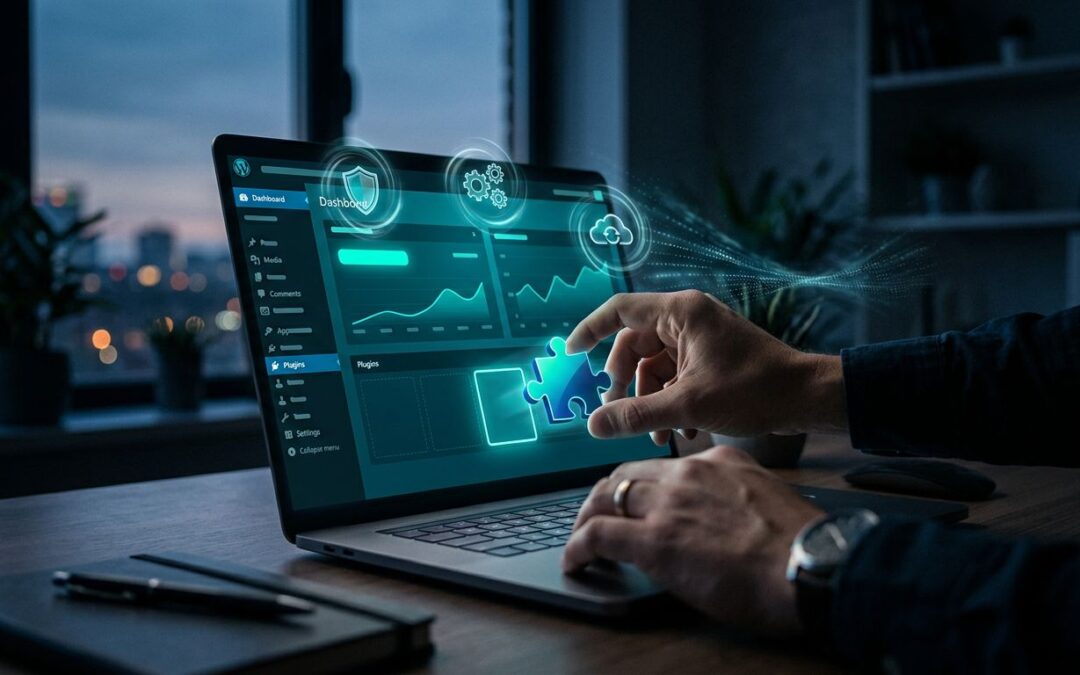
WordPress updates can feel like a small risk with a big payoff. We know they keep a site secure and current, but one bad plugin update can still knock pages off balance fast.
That tension is real for anyone running a business site. We want protection, not panic. We want progress, not a scramble at 9 p.m. when the homepage starts acting strange.
The good news is simple. With a clear routine, a backup habit, and the right hosting setup, we can handle WordPress updates without turning every patch into a crisis.
Start with a routine we can repeat
The worst update plan is the one that changes every time. We need a rhythm, not guesswork. A weekly or biweekly check is enough for many sites, as long as we stay consistent.
A good routine keeps the order clean:
- Check for core, theme, and plugin updates.
- Back up the site before touching anything.
- Update the trusted items first.
- Test the front end, forms, and checkout or key page flows.
- Remove plugins and themes we no longer use.
That last step matters more than many site owners think. Fewer add-ons mean fewer moving parts, and fewer moving parts mean fewer surprises.
For a practical framework, Codeable’s guide to managed WordPress updates is a useful reference. It lines up well with a simple rule we can live with: update often, but never casually.
Back up before we touch anything
A backup is our safety net. Without it, we are gambling. With it, we can move fast and still sleep well.
We should back up both files and the database. One without the other leaves us exposed. We also need to know the backup can be restored. A saved backup that never gets tested is like a spare key we never checked on.
If a backup can’t be restored, it isn’t a backup yet.
That line saves trouble later. It also keeps us honest about the tools we choose.
Here is the minimum we want before any update:
- A full site backup
- A recent database backup
- A restore point we trust
- A copy stored somewhere outside the live server when possible
Backups are not exciting. They are better than exciting. They are the part that lets us fix mistakes without rebuilding the whole site from scratch.
Treat core updates and plugin updates differently
Not every update deserves the same response. WordPress core is the engine. Plugins are the attachments. Both matter, but they do different jobs.
Core updates usually bring security patches, maintenance fixes, or feature improvements. We should move on them quickly, especially when the update closes a security gap. Plugin updates need a little more sorting. A trusted backup plugin is one thing. A custom booking tool that powers customer flow is another.
A simple comparison helps keep it straight:
| Update type | Our best move | Why it matters |
|---|---|---|
| WordPress core | Back up, review the notes, update soon | Core patches often fix security issues |
| Trusted plugins | Auto-update or update right away | Small fixes are easier to absorb |
| Critical plugins | Test first, then update live | These can affect forms, carts, and layouts |
| Themes | Update after checking core and plugins | Themes can change the look and structure of pages |
The takeaway is clear. We do not treat every plugin like a snowflake, but we also do not fire updates at the live site without looking.
If we want a second opinion on safe plugin handling, FastComet’s walkthrough on updating plugins and themes safely is a solid companion piece. It matches the same common-sense approach, test the risky stuff, move quickly on the trusted stuff.
Use staging when the site matters
A staging site gives us a practice field. We can test updates there before they touch the live site. That matters most for stores, membership sites, and custom builds where a small change can affect revenue or signups.
We do not need staging for every single minor patch on a tiny brochure site. We do need it when the site depends on forms, checkout flows, custom templates, or a stack of plugins that all talk to each other.
The best routine is simple:
- Clone the site to staging
- Run the update there first
- Click through the main pages
- Test forms, logins, and purchases
- Move the update live only after it behaves
This is where confidence comes from. Not from hoping. From checking.
The same idea applies to automatic updates. We can let trusted plugins update on their own, especially security tools, backups, and simple utilities. For higher-risk plugins, we keep control. That balance gives us speed without handing over the keys.
Watch for warning signs after the update
Most update issues show up fast. The homepage loads wrong. A button stops working. The editor behaves oddly. A plugin conflict hides in plain sight until someone tries to use a form or checkout page.
We need a short post-update checklist. Nothing fancy. Just the pages that matter most.
Check these first:
- Home page and top landing pages
- Contact forms
- Search and navigation
- Login and password reset flows
- Cart, checkout, or booking steps
- Mobile display on a real phone
If something looks off, stop adding more updates and fix the conflict first. Updating on top of a broken site only makes the mess harder to untangle.
We should also keep an eye on unused plugins and themes. Delete what we do not need. Disabled is not the same as removed. Every extra item is another place for trouble to hide.
Why hosting makes update management easier
This part gets overlooked, but it should not. Good hosting turns update day into routine maintenance instead of a stress test.
We want a host that gives us reliable backups, basic security, and support that answers when something looks wrong. We also want enough room to grow. A small site can start on one plan and move up later when traffic, storage, or speed needs change.
That is where a setup like ZADiC helps. Our WordPress hosting gives us a solid home for a site that needs easy setup and sensible management. If we want a bit more room and power, Web Hosting Plus and VPS plans give us more headroom. If we already prefer cPanel, that option stays simple too.
The value is not just speed. It is calm. When we have free SSL, monitoring, backups, and 24/7 human support behind the site, updates stop feeling like a solo mission. We can move forward with less guesswork and fewer late-night surprises.
That matters for small businesses, online stores, and anyone who needs the site to stay steady while the work keeps moving.
Conclusion
WordPress updates do not have to be dramatic. The sites that stay healthy are the ones we back up, test, and maintain on purpose.
Core updates, plugin updates, and theme updates each need their own level of attention. Once we treat them that way, the process gets lighter, faster, and far less risky.
The real win is simple: update with a plan, not a prayer. When the hosting is solid and the routine is clear, we keep the site protected and the business moving.