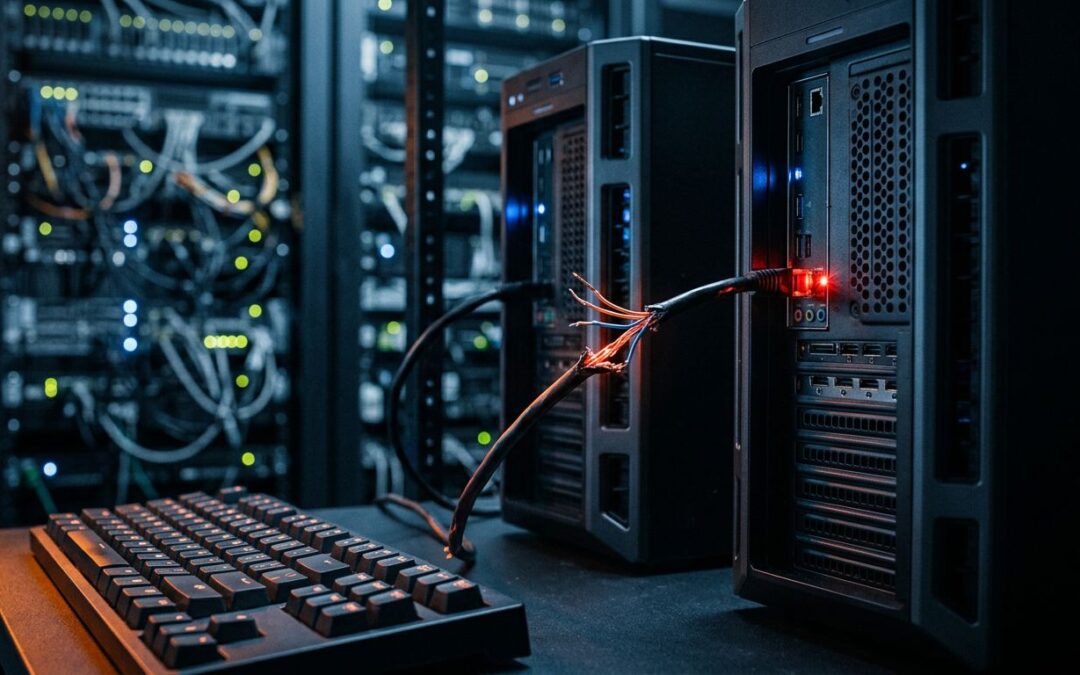
Nothing stalls a site faster than a WordPress 502 error. One minute everything looks fine, the next minute the page is refusing to load and the server is acting like it never heard the request.
Most of the time, the fix is not mysterious. We are usually dealing with a plugin conflict, a theme problem, or a server that has run out of room to breathe.
The good news is that we can narrow it down fast. Once we know where the break happened, the path back is much clearer.
What a WordPress 502 error is really telling us
A 502 Bad Gateway error means one server asked another server for a response, and the answer came back wrong, incomplete, or not at all. In plain language, WordPress tried to do its job, but the connection between systems failed somewhere along the way.
That is why the error feels so frustrating. The site may still exist in the background, the database may still be fine, and the hosting account may still be active. The problem is often in the handoff, not in the whole site.
Here is the fastest way to sort the likely causes.
| Clue | Likely cause | First move |
|---|---|---|
| The error starts after an update | Plugin conflict | Disable plugins |
| Only one theme or page fails | Theme problem | Switch to a default theme |
| It shows up during traffic spikes | Server overload | Check hosting resources |
| It happens behind a CDN | DNS or upstream issue | Review CDN and DNS settings |
If we match the clue to the timing, we stop guessing. That saves time, and it also keeps us from changing the wrong thing first.

The timing matters more than the error code itself. If the problem started right after a plugin update, we start there. If it appears only when traffic is high, we think about load before anything else.
Fix the common WordPress problems first
If the timing points at WordPress itself, we start with the usual suspects. Plugin and theme conflicts are still the most common cause we see, and the first pass is straightforward.
- Disable all plugins and reload the site. If the page returns, one of those plugins is the troublemaker.
- Switch to a default theme like Twenty Twenty-Four. That removes one more variable.
- Clear every cache we can reach, including browser cache, plugin cache, and CDN cache.
- Roll back the last update if the error began right after a change. A new plugin version or theme update can break a site fast.
- Use the file manager or FTP if the dashboard is offline. Renaming the plugins folder forces WordPress to load without them.
If turning off one plugin fixes the page, we stop guessing and start narrowing.
That order is boring, and that is exactly why it works. It strips the site back to the basics and shows us whether the fault lives inside WordPress or outside it.
That same approach lines up with WP Engine’s 502 troubleshooting guide, which starts with plugin checks and log review. When we test in a clean order, the site tells us what it needs.
If the site comes back after a plugin test, we have our answer. If it does not, we move one layer deeper instead of repeating the same guess.
Check the server side before we chase ghosts
When plugins and themes are not the answer, we look lower in the stack. This is where server settings, DNS, and security rules begin to matter.
A few common culprits show up again and again:
- PHP errors or a bad PHP version can stop WordPress before the page finishes loading.
- Low memory limits can choke larger pages, builders, shop features, or heavier plugins.
- Security plugins or firewalls can block a request that looks suspicious to them.
- DNS or CDN problems can point traffic to the wrong place or hold the request too long.
- Server overload can make the gateway wait until it gives up.
When the site sits behind a CDN, a wrong origin target or upstream timeout can trigger the same error code. Cloudflare’s upstream 502 discussion is a useful reminder that many 502s happen between systems, not inside WordPress alone.
This is also where better hosting tools save time. On hosting with cPanel control panel, error logs, PHP settings, and the File Manager are easy to reach. That makes it much easier to see whether the problem is a fatal error, a bad configuration, or a resource limit we have outgrown.
Logs are not glamorous, but they are honest. They tell us what failed, when it failed, and which component failed first. That is the kind of answer we want.
When hosting is the real problem
Sometimes WordPress is not broken at all. The site is simply asking more from the server than the plan can comfortably handle. Shared hosting can carry a lot, but it has a ceiling.
That ceiling gets easier to hit when traffic grows, pages get heavier, or the site starts relying on more plugins, more media, and more background tasks. A store with lots of product images is not the same as a simple brochure site. A busy blog is not the same as a quiet one either.
At that point, moving up a plan is not overkill. It is cleanup.
For growing sites, web hosting plus for growing sites gives us more breathing room than a bare-bones setup. It is a better fit when we want a little more power without jumping straight into full server management.
For sites that keep pushing harder, high-performance VPS hosting plans are the stronger move. VPS resources are isolated, so one noisy neighbor is not dragging our site down. That extra headroom can make the difference between a site that limps and one that keeps moving.
Backups, malware scanning, DDoS protection, and a CDN also matter here. Not because they sound impressive, but because they reduce the odds that one bad moment turns into a bigger mess.

When the hosting stack has more room and better protection, we spend less time putting out fires. That is the real win.
Keep the 502 error from coming back
Once the page loads again, the job is not over. We want the error gone for good, not just quiet for the afternoon.
The cleanest habits are the simple ones. Keep plugins lean. Update one thing at a time. Test major changes before pushing them live. Clear caches after big updates. Watch the logs when something feels off.
If the same error keeps returning, that is a signal. The site is either carrying too much weight, or the plan underneath it is too small for the work it is doing.
A 502 error looks dramatic, but it usually tells a clear story. We read the timing, test the WordPress layer first, then check the server and hosting stack before making bigger moves. That order gets us back online faster.
And when the site has outgrown its current setup, the next fix is not another round of guesswork. It is better hosting, better support, and a stack that can keep up.